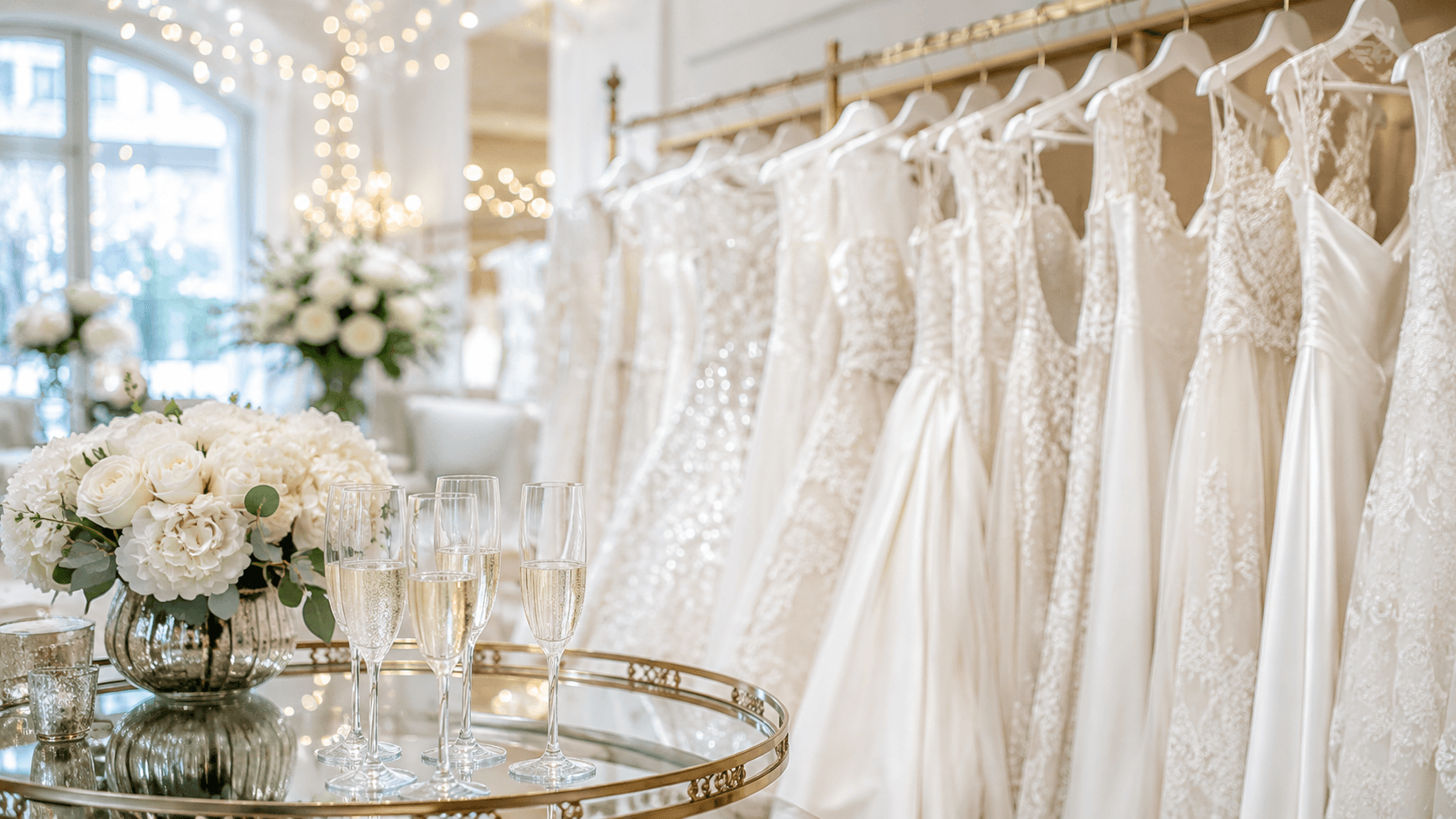
How to Host a Bridal Trunk Show That Actually Makes Money
A trunk show is a weekend where a designer's newest or fullest collection visits your shop — gowns you don't normally stock, usually with a designer incentive for brides who order during the event. The incentive is commonly a discount around 10%, though just as often it's a free or discounted customization: a hem cut to height, a sleeve or neckline change, a veil.
Done well, a trunk show is the highest-revenue weekend on your calendar. Done as "the rep offered us dates, so we said yes," it's a stressful weekend that breaks even. The difference is rarely the gowns. It's the appointment book and the date. Here's the whole play.
How trunk shows actually work
The designer or their rep ships a curated selection, often 15–40 gowns, for a set window — usually Friday through Sunday. Brides book appointments specifically to see that collection, order at the event to get the incentive, and the gowns ship back Monday. Terms vary by designer: who funds the discount (often shared), whether a rep attends, minimum order expectations, and shipping responsibility. Get each of these in writing before you commit a weekend.
From your side, a trunk show is a way to concentrate demand. It gives fence-sitting brides a deadline (this collection and this incentive leave Sunday), gives you a marketing story for weeks of content, and fills a weekend with appointments that skew serious.
The math that decides everything
A trunk show's profitability is nearly determined before it starts, by three numbers: appointments booked, close rate, and event costs. This is exactly what our trunk show ROI calculator computes, but the shape of it is simple:
- You'll sell roughly the number of appointments you book times the share of brides who say yes. Trunk show appointments often close better than everyday traffic, since these brides came specifically for the collection — somewhere around half is a reasonable planning assumption to adjust from.
- Revenue per gown is reduced by the incentive discount. A $1,900 gown at 10% off books as $1,710.
- Your gross profit is that revenue times your margin, minus event costs: the champagne, florals, extra staffing hours, and any rep costs. A modest event runs a few hundred dollars; a lavish one, much more.
Two planning consequences fall out immediately. First, there's a break-even appointment count, and below it you shouldn't run the event — the calculator shows yours. Second, because the costs are mostly fixed, every appointment above break-even is nearly pure profit. That's why the entire game is filling the book.
Picking the date
This is half the outcome, and it's the logic behind our trunk show date picker. The right weekend satisfies one non-negotiable and a couple of boosts.
The non-negotiable: the order deadline still has to work. A bride ordering at the show must receive her gown, with time for alterations, before her wedding. With typical 4–6 month gown lead times plus an alterations buffer, a trunk show mostly serves brides marrying six or more months out. Run the show when those brides are shopping, not when weddings happen.
The boost: engagement season. The December–Valentine's engagement wave turns into peak shopping traffic in roughly January through March, which is why those are the classic trunk show months. Avoid the dead zones — mid-December (everyone's busy) and deep summer (your buyers are at their own events) are historically weak weekends.
Saturday anchors the show. Friday evening and Sunday extend it for brides who couldn't get a Saturday slot.
The run-up: a week-by-week plan
One scheduling reality first: sought-after designers book their trunk show routing many months ahead, often a season or more and frequently at market. So the date conversation starts long before this plan does. The run-up below begins once your weekend is locked.
- 6–8 weeks out: confirm terms with the designer in writing. Block the weekend's calendar with trunk-show appointment slots (longer than usual, since brides are seeing more gowns). Announce the date to your mailing list.
- 4 weeks out: open booking publicly. Post the visiting collection on Instagram (designers will supply imagery), add the event to your Google Business Profile, and send a personal invitation to every bride in your system whose wedding date fits the lead-time window. That last list outperforms every other channel, and it's exactly the kind of query your customer records should be able to answer.
- 2 weeks out: call or text your maybes. Fill Friday and Sunday by offering them to Saturday's waitlist. Brief your stylists on the collection — names, prices, stories.
- Event week: confirm every appointment with reminders. A no-show at a trunk show is doubly expensive, because both the slot and the incentive urgency are gone. Prep the fitting rooms, chill whatever you're serving, and steam everything the day it arrives.
- Monday after: follow up with every bride who didn't buy. Some designers extend the incentive a few days for post-show orders, and even when they don't, "the gown you loved is orderable at regular terms" converts stragglers. Then reconcile: appointments, closes, revenue, costs. That record is your negotiating leverage for the next designer conversation.
Common mistakes
- Booking the designer's convenient date instead of your best date. Reps propose dates that fit their routing. A February Saturday and a July Saturday are not the same event.
- Underfilling Friday and Sunday. The gowns are already there, so the marginal appointment costs nothing. Waitlists and personal invitations exist for exactly this.
- No deposit on trunk show appointments. These are premium slots with genuine scarcity — the clearest case for a booking deposit you'll ever have.
- Treating it as a sales weekend instead of a content month. The arrival unboxing, the steaming, the fitting-room reveals — a trunk show generates four weeks of Instagram material if you shoot it.
FAQs
How many gowns does a trunk show need? Whatever the designer sends, typically 15–40. Depth matters less than story: a coherent new collection out-converts a grab bag of styles.
Do trunk shows require discounting? An incentive is customary, but its shape is negotiable — a percentage off (often around 10%, frequently shared with the designer) or a free customization like a cut-to-height hem or a sleeve change. Either way, the real driver is scarcity: the collection leaves Sunday. Confirm who funds whatever you agree to, in writing.
How far in advance should brides order at a trunk show? Same rule as any special order: gown lead time (commonly 4–6 months) plus an alterations window. That's why the date-picker logic works backwards from wedding dates.
Is a trunk show worth it for a small shop? Often more so. It's rented depth — you get a big shop's collection breadth for a weekend without buying the samples, and the break-even math just needs to clear a lower cost bar.
Run your own numbers before you commit the weekend: the trunk show ROI calculator finds your break-even appointment count, and the date picker scores the next twelve months for your shop's season.