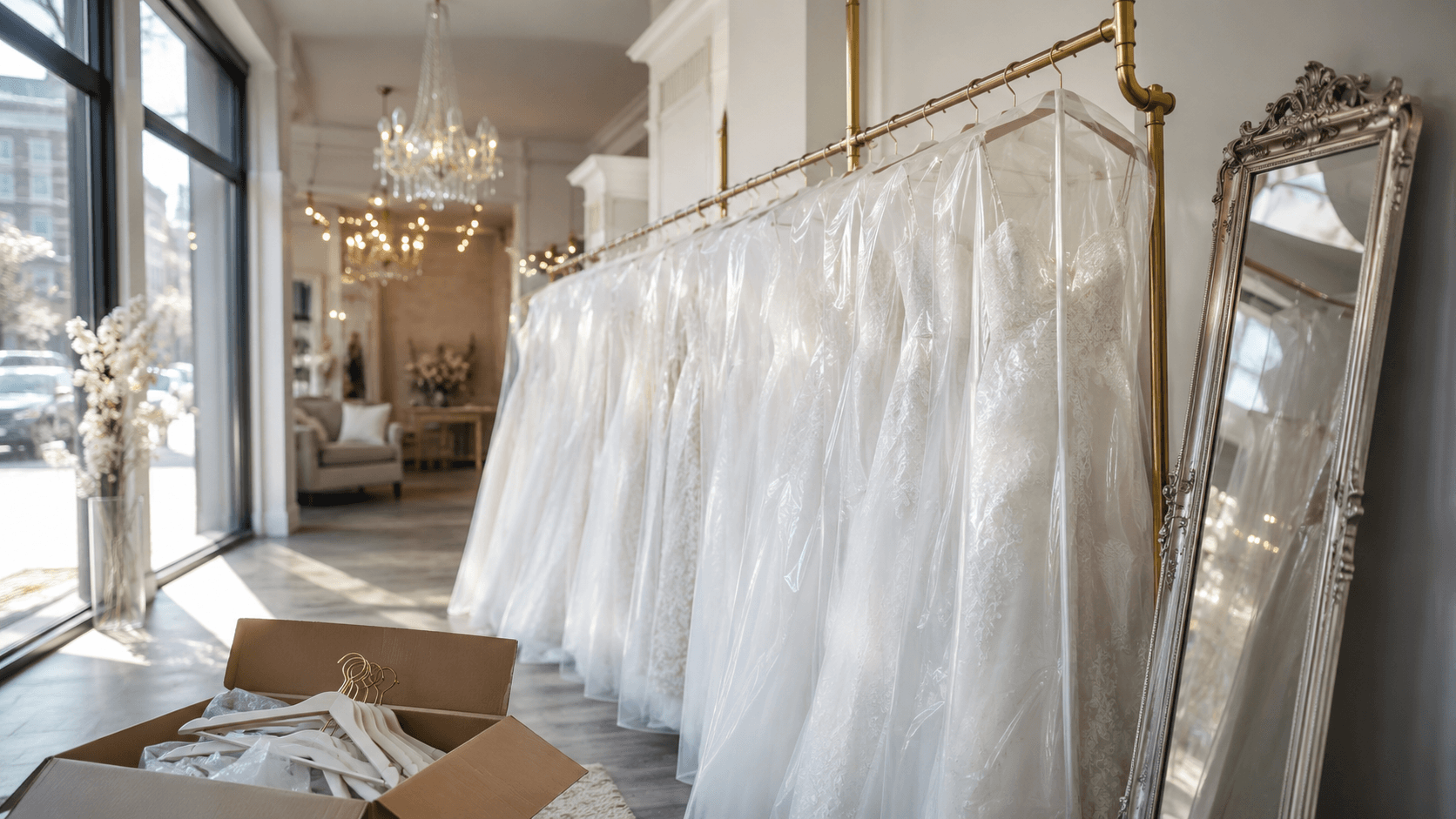
How to Open a Bridal Shop or Boutique: A Step-by-Step Guide for 2026
Whether you're starting a bridal boutique, a wedding dress shop, or a small by-appointment studio, opening one is a different project from opening most retail stores, for one structural reason: your core product takes 4–6 months to arrive. Made-to-order sample gowns are ordered from designers months before they hang on your racks, which means the whole project runs backwards from your opening date. The most common planning mistake is treating designer relationships as a late step when they're actually the first domino.
This guide walks through the sequence. For the money side, we've published a separate line-by-line budget breakdown and a free startup cost calculator. Expect roughly $95k–$635k depending on size, market, and buildout, with a mid-sized boutique in an average-rent market around $265k.
Step 1: Decide what kind of boutique you're starting
Before the business plan, three model decisions shape everything downstream.
- Full retail vs. by-appointment studio. A by-appointment studio — smaller space, 30–40 samples, low fixed costs — can open on a fraction of the budget, and it's a common first step. Full retail can come later, once demand proves out.
- Your price segment. The designers you can carry, the buildout level brides expect, and your alterations pricing all follow from whether you're a value, mid-market, or luxury shop. Pick deliberately. Straddling segments confuses both brides and designers.
- What you'll carry beyond bridal. Bridesmaids, mothers, accessories, tuxedo rentals, and prom each add revenue, but each also adds inventory complexity. Most shops open bridal-first and expand.
Step 2: Business plan, entity, and the boring-but-blocking paperwork
Register the business entity, get your EIN, open the business bank account, and — easy to forget until it blocks you — get the sales tax permit, which designers commonly require before opening a wholesale account. Your business plan needs a 12-month cash-flow projection. Build it from the budget lines in the cost breakdown rather than a generic template, because bridal's cash-flow shape — inventory paid for months before revenue arrives — is exactly what generic templates miss. Our free bridal shop business plan template builds that projection for you, and the business plan guide walks through each section.
If you're financing, the SBA 7(a) program is the common route at this scale, and the lender will want precisely that line-item budget and projection.
Step 3: Start designer conversations now, not later
This is the step that sets your timeline. Wholesale bridal accounts come with terms that vary widely by designer: opening order minimums, seasonal reorder minimums, and territory protection. Many designers won't place two accounts near each other, which means the designers available to you depend on who your neighbors already carry.
Start these conversations before you sign a lease. What you learn — which designers are open in your territory, their minimums, their delivery windows, their rush fees — can change your budget, your segment, even your location choice. Bridal market weeks are where many first accounts get opened, and walking a market before you commit to anything is one of the highest-value research trips you can take. When you're ready to plan the buy itself, our open-to-buy planner turns planned sales into a wholesale budget and sample count.
Step 4: Find the space, and negotiate like bridal, not like retail
Bridal is destination retail: brides book appointments and drive to you. That changes the location math. Parking and a comfortable arrival beat walk-by foot traffic, which means you often shouldn't pay prime-pedestrian-strip rents. What the space does need: room for fitting areas (they sell the gown), a spot for a raised platform with good mirrors, and seating for the entourage.
Negotiate the lease knowing your buildout plans. Tenant improvement allowances and free-rent months are normal asks, and they directly offset your largest budget line. Plan on roughly three months of rent due around signing.
Step 5: Buildout — spend on light, mirrors, and fitting rooms
The construction budget runs from a light refresh (around $15/sq ft) to a full high-end renovation ($120+/sq ft), with a standard buildout planning figure near $60/sq ft. Real bids often come in above these numbers, so get three before committing. Where the money should go first, in order: lighting (brides buy the gown they look best in, and no construction dollar earns back more), fitting rooms, the platform-and-mirrors moment, and seating. Decor can be upgraded later from cash flow. A badly lit fitting area can't be worked around.
While walls are going up, place your opening sample orders. This is the 4–6 month lead-time item, and it has to happen in this window for gowns to arrive before opening.
Step 6: Set up your operating systems before the first bride, not after
Somewhere in the 2–4 months before opening, decide how the shop will actually run day to day: appointment booking, customer records, inventory, orders, payments. Two pieces of hard-won sequencing advice:
- Configure online booking with deposits from day one. A deposit or card-on-file policy set at opening is simply "how the shop works" — nobody's expectations have to change, because none existed yet. Here's the policy math and a ready-to-use template.
- Track where every appointment comes from, starting with the first booking. Six months in, you'll want to know whether Instagram, Google, or planner referrals are filling your calendar, and that's only knowable if you captured it from the start.
Whether you run one platform or several is your call — we've written an honest buyer's guide for evaluating the options, including when generic tools are enough. The mistake isn't choosing "wrong." It's opening on memory and spreadsheets and trying to add systems during your first busy season.
Step 7: Hire for consultations, not transactions
Your first stylist hire matters more than most retail hires, because bridal selling is a guided experience: reading the bride, managing the entourage, and knowing when to bring out "the one." Train on consultations — the appointment arc, handling "I'll think about it," the follow-up — not just the register. Budget staffing into your working capital from day one (our cost guide assumes it), because appointment coverage can't wait for revenue.
Step 8: Launch — soft first, loud second
- Google Business Profile and a website with your booking link. Most brides will find you through search and book outside your open hours.
- Instagram from the moment gowns start arriving. Unboxing and steaming content is genuinely what this audience wants to see.
- A friends-and-family soft launch to rehearse the full appointment flow — booking, greeting, fitting, checkout — before a real bride experiences it.
- A grand opening that invites the local wedding industry, not just shoppers. Photographers, planners, florists, and venues are your referral network for years, and this event is for them as much as for brides.
After opening day, our bridal shop marketing guide covers how to keep the appointment book full.
The timeline, compressed
- 6+ months out: model decision, business plan, entity/EIN/sales-tax permit, location scouting, designer conversations begin
- 4–6 months out: lease signed, buildout ordered, sample orders placed (the hard deadline)
- 2–4 months out: systems configured (booking and deposits first), first stylist hired and trained
- 0–2 months out: Google profile, website, Instagram, soft launch, grand opening
FAQs
How long does it take to open a bridal shop? Plan on 8–12 months from decision to doors open. Six is only possible if the lease, buildout, and sample orders all run perfectly in parallel, which they rarely do. The hard floor is set by gown lead times: samples ordered today arrive in 4–6 months (designers do sell rush production for a fee, but you don't want to open on rush cuts), and you want them steamed and on the floor before your first appointment.
How much does it cost to start a bridal boutique? Expect roughly $95,000 to $635,000, depending on size, market, and buildout. A mid-sized boutique of about 1,800 sq ft in an average-rent market works out to around $265,000, much of it a cash reserve for a first year when sales are still building. The biggest swings come from the buildout, the size of your opening sample order, and how much working capital you hold in reserve. The line-by-line budget works through three examples, and the startup cost calculator builds an estimate for your own square footage and market.
Is a bridal boutique profitable? It can be, and whether yours will be comes down to a few numbers you can estimate before you open: how full your appointment calendar is, how many appointments end in a sale, and your average sale. Rent and payroll cost the same whether the calendar is full or not, so a well-booked shop with a solid close rate is in a very different position from one with empty Saturday slots. Are bridal shops profitable? works through the math.
Can I start a bridal boutique from home, or with little money? A by-appointment studio is the lowest-cost way in: a smaller space, 30–40 samples, and lower fixed costs, as described in Step 1. It still takes real capital, because sample gowns are bought months before your first sale. Ask designers about their account requirements early, since some only work with shops that have a retail space or meet a minimum opening order. For comparison, the lean shop in the budget guide, 1,200 sq ft in a modest market, comes to about $94,000, and a studio with fewer samples and no storefront buildout can come in under that.
Can I open a bridal shop with no industry experience? People do, but the learning curve is real — bridal selling, buying, and alterations each have craft to them. The commonly recommended shortcut is working in a shop first, even briefly, or hiring your first stylist specifically for their bridal experience rather than a general retail background.
How do I get inventory for a new bridal shop? Through wholesale accounts with bridal designers. You order samples for brides to try on in the shop, and most brides' gowns are then special-ordered in their size. Designers set opening order minimums and protect territories, so start those conversations before you sign a lease (Step 3), and plan to walk a bridal market, where many first accounts get opened. The open-to-buy planner turns your sales plan into a wholesale budget and sample count.
How many designers should I open with? Enough to fill 40–100 samples with a coherent range of silhouettes and price points. For most shops that's roughly 3–6 designer accounts. Fewer, deeper collections usually beat many shallow ones, and each account carries its own minimums.
How do you market a new bridal boutique? Start before you open. Set up a Google Business Profile and a website with your booking link, since most brides find a shop through search and book outside opening hours. Post on Instagram as your gowns arrive, run a soft launch to rehearse the appointment, and invite local photographers, planners, florists, and venues to your opening, because they send referrals for years. Step 8 has the full launch list.
What's the most common mistake first-time bridal shop owners make? Sequencing — treating designer accounts and sample lead times as a late detail. The second most common is budget shape: underfunding working capital to afford a nicer buildout. The budget guide covers why that trade goes wrong.
Start with the numbers: the free startup cost calculator gives you an itemized budget for your square footage and market, plus the opening checklist this guide expands on.