Wedding Dress Alterations Timeline: When to Start and What Happens at Each Fitting
The short answer: book your first fitting about 8–10 weeks before the wedding, expect two to three fittings, and plan to pick up a finished gown one to two weeks out. That schedule is comfortable for the sewing room and safe for you. Most gowns need it, and complex work — sleeves, corset conversions, heavy beadwork — genuinely uses all of it.
The longer answer starts months earlier, because alterations sit at the end of a chain that begins the day you order the dress. Here's the whole timeline, what actually happens at each fitting, and what changes when the wedding is closer than the classic schedule allows.
The full timeline, working backward from the wedding
- 8–12+ months out: order the gown. Made-to-order wedding dresses commonly take 4–6 months to arrive from the designer. The gown is ordered to the designer's own size chart, sized to your largest measurement — which is why alterations are all but guaranteed — and the arrival window sets everything downstream.
- 2–3 months out: the gown arrives. The shop inspects it and calls you in to try it on and confirm it's the right dress in the ordered size. This try-on isn't a fitting; it's a checkpoint.
- 8–10 weeks out: first fitting. The big one, covered below. The work is pinned, the bustle designed, and the price quoted.
- 3–6 weeks out: second fitting. The completed work gets checked on your body, and someone from your wedding party learns the bustle.
- 1–2 weeks out: final fitting and pickup. Exact shoes, exact undergarments, final tweaks, and the gown goes home pressed and bagged.
Why not start earlier than 10 weeks? Bodies change over months, and a gown fitted perfectly in January can fit differently in June. The 8–10 week window is close enough to the wedding that the fit holds, and far enough out that the sewing queue isn't rushed.
What happens at each fitting
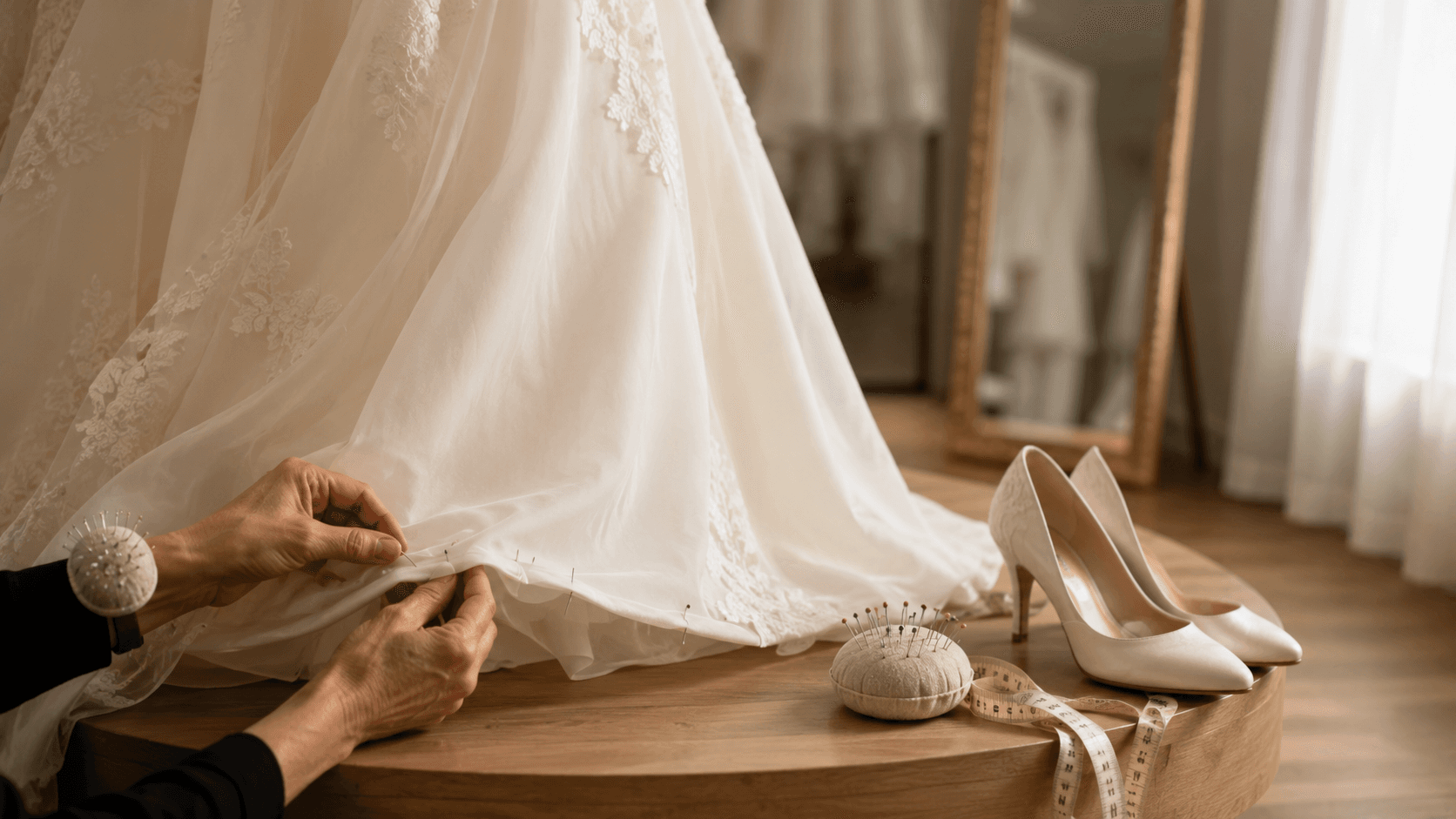
The first fitting does most of the deciding. You wear the actual shoes and undergarments you'll wear on the day. This matters more than most brides expect: a hem is cut to a heel height, and a neckline sits differently over different support. The fitter pins the hem, the take-ins, and any strap or sleeve work, and designs the bustle alongside the hem, because the two interact. This is also where the quote happens — a written price, service by service, before any work begins. (What those services typically cost is its own topic; see our alterations pricing guide.)
The second fitting checks the completed work in motion: walk, sit, raise your arms, hug someone. It's also bustle school. The maid of honor, or whoever will handle it on the day, should attend, practice the bustle, and take a phone video — a French bustle learned once at 4pm is forgotten by the reception.
The final fitting is a dress rehearsal in the last week or two, with everything exactly as it will be on the day. Most gowns need nothing more than a press at this point. The appointment exists to catch the small things while there's still a seamstress between you and Saturday.
When there's less time: the compressed timeline
Plenty of weddings don't leave room for the classic schedule — a short engagement, a gown bought late, or a dress bought off the rack at a sample sale, where the gown is available immediately but may be a size or two off. In those cases, the alterations become the entire timeline.
What to expect when the wedding is inside about six weeks:
- A rush fee is normal. Compressing the schedule means displacing other brides' work in the sewing queue, and shops commonly charge around $150 or 25% of the alterations total for it. That's fair, not punitive — seamstress hours are the scarcest resource in the building.
- Fittings get combined. Two visits instead of three, sometimes one marathon appointment for simple work.
- Some work comes off the table. A hem and a bustle can be responsibly done in a week or two. A zipper-to-corset conversion or a full re-beading can't, and a good shop will say no rather than compress structural work past what quality allows.
If you're on a short timeline, say so at the try-on stage. A shop that knows the date can often steer you toward gowns whose construction alters quickly.
For shop owners: the timeline is a workflow, not advice
Every step above is an appointment, a quote, or a deadline your shop is expected to remember, multiplied by every bride in the book. The operational version of this article:
- Book the fitting sequence when the order is written, not when the bride calls in a panic at week six. The wedding date is known on day one, so the 8–10 week and 3–4 week appointments can go on the calendar the same afternoon, with automatic reminders doing the remembering.
- Quote at the first fitting, in writing, on the order. Alterations that live on a sticky note are the ones that never get collected with the balance. In CloudBridal, alterations attach to the order itself — as a flat fee, a service menu, or itemized line items — and fittings run through the same calendar as every other appointment.
- Protect the sewing queue with the same discipline as the sales floor. A missed fitting wastes seamstress hours the same way a no-show wastes a stylist. The deposit-and-reminder playbook applies to fittings too.
- Publish your rush policy. A printed fee and cutoff turns the week-four phone call from a negotiation into a booking. Our price sheet builder includes the rush line for exactly this reason.
FAQs
How long do wedding dress alterations take? The standard arc runs 8–10 weeks from first fitting to pickup, across two or three appointments. The actual sewing is a fraction of that; the calendar time reflects the fitting sequence and the shop's queue.
Can a wedding dress be altered in two weeks? Simple work — a hem, a bustle, minor take-ins — often yes, with a rush fee and subject to the queue. Structural work like corset conversions or heavy beadwork usually can't be compressed that far, and a shop that says no is protecting your gown.
What should I bring to my first fitting? The exact shoes and the exact undergarments you'll wear on the day. Bring the accessories too if you have them — a veil and jewelry help the fitter (and you) judge the whole picture.
What if my dress arrives later than expected? Tell the shop the moment you know. Designers' windows do slip, and a shop that hears early can usually hold a compressed fitting plan for you. One that hears at week five is choosing between rush fees and miracles.
Do I have to get alterations where I bought the dress? No, though there are real advantages: the shop knows the gown's construction, the designer relationship helps if something's wrong with the dress itself, and the fittings live on the same record as your order and balance. If you go independent, choose someone who works on wedding gowns specifically.
Shop owners: the fitting timeline is only as reliable as the system running it. See how CloudBridal tracks alterations from first fitting to pickup — quotes on the order, fittings on the calendar, reminders on autopilot.