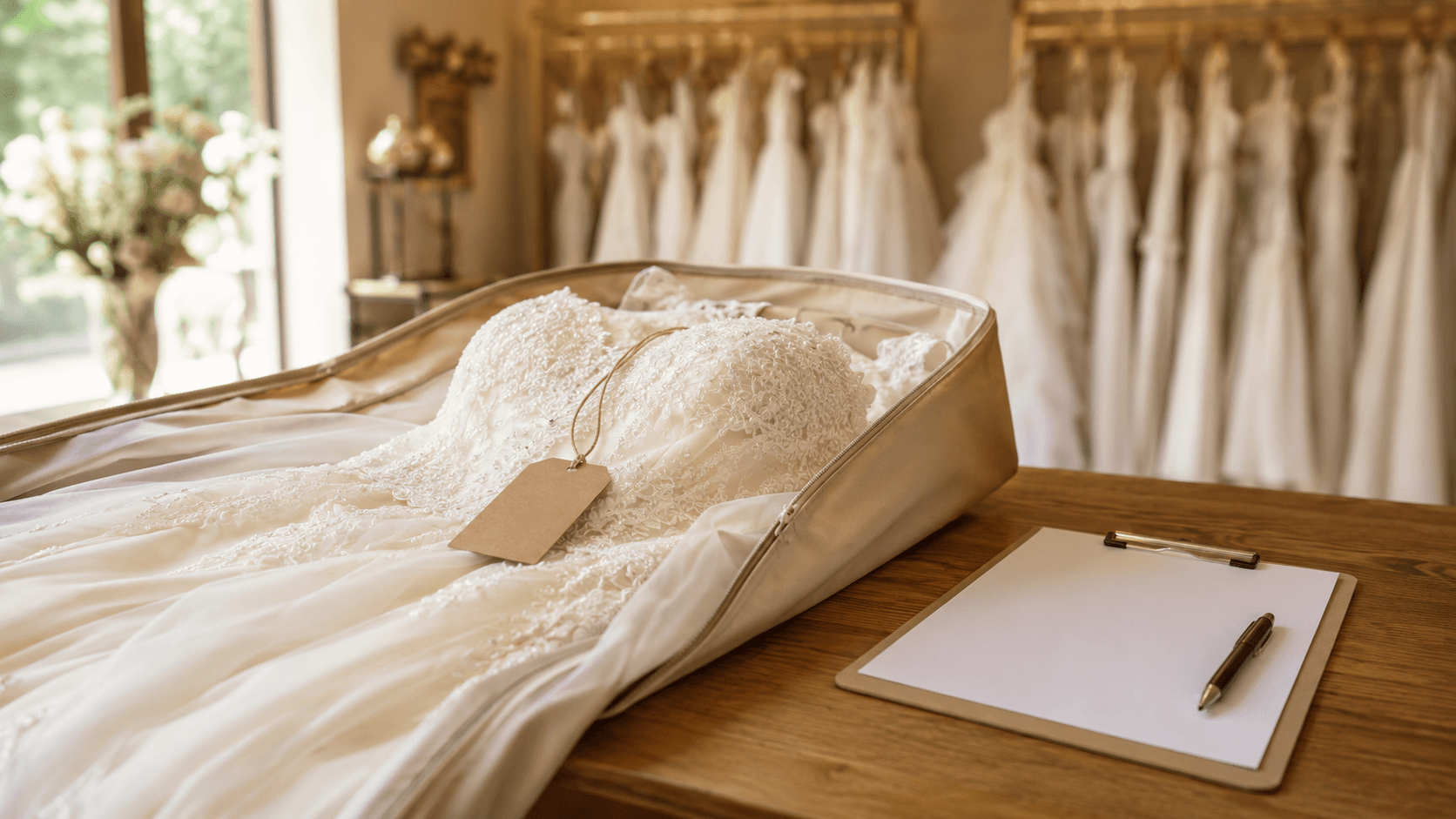
Bridal Consignment: How the Deal Works, and When to Buy Instead
Consignment shows up in a bridal shop's life in two forms. Either a designer or rep offers you gowns to display without buying them, and you pay only when one sells. Or a past bride offers you her cleaned, once-worn gown to resell for a cut. Underneath, both are the same deal: the owner keeps ownership, you provide the floor space and do the selling, and the sale price gets split. This guide covers how those deals are typically structured, the math for deciding when consignment beats buying wholesale, and the agreement details that keep it from turning into a dispute.
One thing to keep in mind throughout: consignment isn't free inventory. It uses up rack space and try-on attention that a proven, fully-owned sample might earn more from.
How a bridal consignment deal is structured
Every consignment arrangement needs to answer five questions, and all five belong in writing before the gown touches your rack.
- The split. Your share of the sale price commonly lands between 40% and 60%, with an even 50/50 being the most common starting point. Your share should reflect who carries the effort. If you're steaming, storing, insuring, and fitting the gown for months, the higher end is fair.
- The term. How long you'll display the gown before it goes back. Consignment retail broadly runs on 60–120 day terms, and in bridal a selling season is a natural window. Avoid open-ended terms: the gown occupies a slot indefinitely and nobody ever has a reason to make a decision about it.
- The price, and who can change it. Agree on the starting tag price and whether you're allowed to mark it down over the term without asking. Writing a markdown schedule into the agreement ("after 90 days, up to 20% off at the shop's discretion") saves an awkward phone call later.
- Condition and risk. Inspect and photograph the gown at intake, note any flaws, and have both parties sign off. Decide who bears the cost if it's damaged during a try-on. That's usually you, which is why your business insurance should explicitly mention consigned goods.
- The exit. What happens if it doesn't sell: returned in what condition, by when, picked up by whom. Also decide whether the owner can recall the gown mid-term, because a recalled gown can strand a bride who was about to buy it.
The math: consign it, or buy it outright?
When a designer offers you the same gown both ways, the right answer depends almost entirely on one number: how likely the gown is to sell this season.
The logic is straightforward. If you buy the gown and it sells, you keep the full retail margin. If you buy it and it doesn't sell, you own a sample you'll eventually clear at a markdown, probably below what you paid. Consignment cuts off both extremes: you earn a smaller share when it sells, and you lose nothing but floor space when it doesn't.
Here's a worked example with typical numbers: an $1,800 gown, $820 wholesale, a 50/50 split, and a realistic $500 recovery price if it never sells and you have to clear it. At a 60% chance of selling this season, consignment comes out ahead — roughly $540 of expected profit versus about $460 for buying, because the 40% chance of eating a markdown loss drags the buy side down. At 80% sell-through the two deals break even, and above that, buying wins by a widening margin. Our free consignment vs. buy calculator runs this for your actual numbers and shows the crossover point for the specific gown in front of you.
The practical takeaway: consign the experiments, buy the proven sellers. An untested designer, an unusual silhouette, a price point above your usual ceiling — those are genuine coin flips, and consignment prices that risk correctly. A reorder of a style that generated ten special orders last year is not a coin flip, and consigning it just donates half your margin.
The math is only half the decision, though. Buying builds the designer relationship and gets you reorder priority, and the gown is yours to mark down on your own schedule, on your own markdown ladder. Consignment keeps your cash free, but the owner can recall the gown, and condition disputes land on you.
Pre-owned consignment from brides
Reselling a past bride's gown runs on the same skeleton, with a few different specifics.
- Be selective at intake. Take gowns that are professionally cleaned, recent enough to be a current silhouette (a common cutoff is within the last few years), and honestly graded. One visibly tired pre-owned gown on the rack discounts everything hanging near it.
- Price against reality. Pre-owned gowns commonly resell at around half their original retail, adjusted for condition and how current the style is. The original receipt helps set an honest starting point.
- Put it in writing, even more so. The consignor is a regular person, not a rep, so the agreement matters more, not less: term, split, markdown rights, a pickup deadline for unsold gowns, and exactly what you are and aren't liable for.
- Know why you're doing it. A pre-owned rack serves budget-conscious brides you'd otherwise lose, and it turns past customers into referral sources. It also takes real administration, which brings us to the next section.
The operational side nobody warns you about
Consignment fails operationally more often than financially. The gown sells and nobody can find the agreement. The consignor swears the payout is late. The owner recalls a gown a bride was about to buy. The fixes are unglamorous:
- Track consigned pieces as their own category in your inventory records, flagged so staff can see at a glance which gowns aren't yours, what the split is, and when the term ends.
- Pay out on a fixed schedule (monthly is common), based on the sale record, not memory.
- Watch the term dates. A consigned gown quietly passing its return deadline is how relationships with designers and past brides go sour.
- Mind the sample-sale interplay. Your own aging samples can be marked down and cleared whenever your markdown ladder says so. A consigned gown can't — not unless you negotiated markdown rights at intake.
FAQs
What's a typical bridal consignment split? Your share usually falls between 40% and 60% of the sale price, with 50/50 the common anchor. The more of the work you carry — storage, steaming, fittings, insurance — the stronger your case for the higher end.
How long should a consignment term be? Long enough for a real selling season, short enough to force a decision. A defined term of a few months with an explicit renewal beats an open-ended arrangement for both sides.
Is consignment better than buying wholesale? It depends on how likely the gown is to sell. Below the crossover sell-through rate, consignment wins; above it, buying wins. For typical numbers the crossover sits high — around 80% in the worked example above — which is why consignment suits unproven styles and buying suits proven ones. Run your own numbers before deciding on feel.
Who's responsible if a consigned gown is damaged in the shop? Whatever the agreement says, which is why it needs to say. In practice the shop usually bears try-on wear and damage, and your business insurance should explicitly cover goods you hold on consignment.
Deciding on a specific gown? The free consignment vs. buy calculator compares expected profit under both deals and finds the sell-through rate where buying takes over.