Bridal Shop Marketing: How Boutiques Fill Their Appointment Book (2026)
Most marketing advice is about getting found. For a bridal shop, getting found is only the first step. Almost every gown sale goes through an appointment, so marketing really runs as a chain: a bride finds you, books, shows up, buys, and then tells her friends. A weak link anywhere in that chain costs you brides you already paid to attract.
That's good news for a small shop, because the cheapest improvements are often further down the chain. Online booking that works at 10pm, a deposit that stops no-shows, and a follow-up call to the bride who said she'd think about it all cost less than an ad campaign, and they make every other channel work harder.
This guide works through the chain in order, starting with the one habit that makes everything else measurable.
1. Know where your brides come from
Ask every bride how she heard about you, at the moment she books. Put the question on your booking form and on the phone script, with a short list of answers: Google, Instagram, a friend, a past bride, a photographer or planner, a wedding show, an ad, and "other".
Then look at which sources bring brides who buy, not just brides who book. A source that fills Saturday with browsers can look like your best channel until you compare purchases. After a season, you'll know where to spend your time and money, and which channels you can quietly drop.
Without this, every decision in the rest of this guide is a guess.
2. Be found when she searches
Most brides start with a search, often on their phone and often outside your opening hours.
- Google Business Profile. Choose "Bridal shop" as your main category, add your hours, real photos of your fitting rooms and gowns, and your booking link. Reply to reviews. For "bridal shop near me" searches, this profile often matters more than your website.
- Google reviews. Ask happy brides for a review at pickup, when the gown is finished and she's excited. A steady trickle of recent reviews matters more than a big batch from opening month.
- Your website. Brides want to know three things before they book: which designers you carry, roughly what gowns cost, and how to book. Put all three where they can't be missed. A price range ("most of our gowns are $1,200–$2,800") filters out brides you can't serve and reassures the ones you can.
- Designer "find a retailer" pages. Brides search for designer names plus their town, and most designers list their authorized shops on their own websites. Check that every designer you carry lists you, with your correct address and website.
3. Instagram and short video
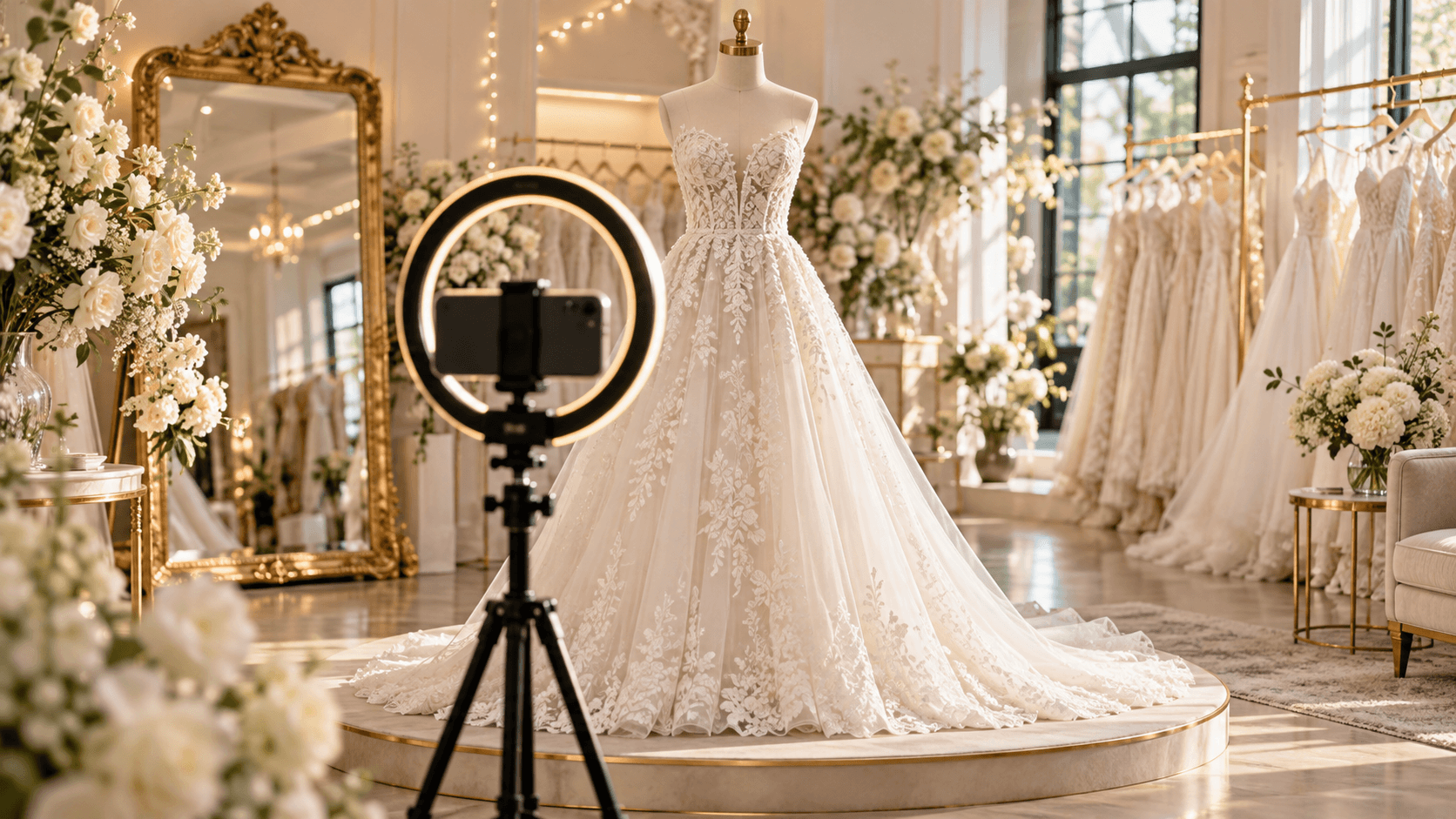
Brides use Instagram and TikTok to decide what they like and where to try it on. What works is what they can't see anywhere else: try-on clips, new arrivals coming out of the box, how a gown moves, and real brides (with their permission) on their wedding day.
Post consistently, show your shop and your stylists, and point every post back to booking. One clear link to your booking page beats a profile full of links.
4. Word of mouth and past brides
A bridal appointment is rarely just the bride. Her mother, her friends, and her bridesmaids are in the room, and some of those bridesmaids will be engaged in the next couple of years. The way the whole party is treated is marketing.
- Make the appointment worth talking about. A stylist who knows her name and her wedding date, the right gowns pulled, and an unhurried "yes" moment do more than any ad.
- Stay in touch after the wedding. Ask for her photos, share them (with permission), and thank her. Brides who feel remembered recommend you.
- Give past brides something to pass on. A simple referral perk for a friend's first appointment works, and so does a personal note inviting her bridesmaids in.
- Use the bridesmaid and prom crowd. If you sell bridesmaid or prom dresses, those customers are tomorrow's brides. And if you dress mothers of the bride, a mother who enjoyed her visit talks to other mothers with weddings coming up.
5. Your local wedding vendor network
Photographers, planners, venues, florists, and hair and makeup artists meet engaged couples before you do, and couples ask them for recommendations. A handful of vendors who trust you can send a steady stream of brides for years.
- Introduce yourself in person, and send brides to them too. Referrals that run both ways last.
- Join or host a styled shoot. Vendors get photos for their portfolios, and your gowns appear in their posts.
- Invite vendors to your opening, trunk shows, and new-collection events, not just brides.
- Track vendor referrals by name, so you know who to thank.
6. Events
Events give brides a reason to book now rather than "sometime":
- Trunk shows bring a designer's full collection in for a weekend. Our guide on how to host a bridal trunk show covers the appointment math and the run-up, and the trunk show date picker helps you choose the weekend.
- Sample sales clear aging samples and bring in value-minded brides. See how to run a bridal sample sale.
- Bridal shows and expos put you in front of many newly engaged couples at once. Booth fees vary widely by city, so ask past exhibitors how many appointments the show actually produced, and book appointments at the booth rather than collecting business cards.
7. Paid ads, if you use them
Paid channels can work for bridal shops, but they're the easiest place to waste money. A few principles:
- Start small and local. A modest Meta (Facebook and Instagram) campaign aimed at your area, or Google ads on searches like "bridal shop near me", is enough to learn whether paid traffic books.
- Send ads to booking, not your homepage. Every extra step loses brides.
- Test wedding directories the same way. Directories such as The Knot and WeddingWire offer paid listings. Ask brides who mention them whether that's really where they found you, and compare the cost with the brides who bought.
- Keep only what your tracked sources prove. If a channel brings bookings but few purchases after a full season, cut it or change it.
8. Turn interest into appointments, and appointments into sales
This is where many shops lose the brides their marketing worked to attract.
- Let her book at 10pm. Online booking catches the bride who's browsing after work and would otherwise forget by morning.
- Protect the slot. A small deposit or card hold for appointments cuts no-shows sharply. Our no-show policy guide covers what to charge and has a policy you can copy, and the no-show calculator shows what empty slots cost you now.
- Follow up with every bride who didn't buy. A personal message within a few days, mentioning the gown she loved, brings many of them back. Without a follow-up, she often buys from the next shop she visits.
- Look for brides with a wedding coming up and nothing booked. A monthly look through your customer list for these brides is one of the cheapest sources of sales you have. Our reports guide explains which numbers to check and when.
- Raise the average sale gently. Veils, accessories, and alterations are part of the complete look. See the art of upselling in bridal retail.
9. A simple marketing calendar
Bridal demand isn't spread evenly through the year, and your marketing shouldn't be either.
- Before December: get your Google profile, reviews, and booking page in shape, and plan your winter events. Many engagements happen between December and Valentine's Day.
- January through March: the busiest stretch for new brides, who often start shopping 9 to 12 months before their wedding. This is when trunk shows, ads, and expos earn the most, and when online booking and fast follow-up matter most.
- Spring and summer: keep in touch with brides who visited but haven't bought, run a sample sale for aging samples, and gather wedding photos from past brides.
- Autumn: look back at your referral sources, drop what didn't bring buying brides, and set next year's budget.
10. What to budget
There's no single right number. Small-business guidelines commonly suggest spending somewhere between a few percent and about 8% of sales on marketing, and a new shop usually spends more in its first year while it builds a name. For a shop selling $275,000 a year, 3–5% works out to roughly $700–1,150 a month.
How you spend matters more than how much. Put the first dollars into the free and cheap work (your Google profile, reviews, Instagram, vendor relationships, and follow-up), then add paid channels one at a time and keep the ones your tracked sources prove.
Common mistakes
- Not tracking sources. Without it, you can't tell good spending from bad.
- Judging channels by bookings instead of purchases.
- Paying for attention, then losing the bride at booking. A slow phone callback or a booking page that only works in opening hours undoes the ad that brought her.
- Forgetting past brides and vendors, the two groups most likely to send you the next bride.
FAQs
How do bridal shops get more customers? Mostly through search, Instagram, and recommendations from past brides and local wedding vendors. The shops that grow fastest also make it easy to book online, protect appointments with deposits, and follow up with every bride who doesn't buy on the first visit.
What is the best marketing for a bridal shop? The best channel is the one your own tracking proves brings brides who buy. For most shops, a strong Google Business Profile, steady reviews, Instagram, and a vendor referral network do the most for the least money.
How much should a bridal shop spend on marketing? Small-business guidelines commonly suggest a few percent to about 8% of sales, with more in the first year. Start with the free and low-cost channels and add paid ones only when you can track their results.
When is the busiest season for bridal shops? Many engagements happen between December and Valentine's Day, so January through March is usually the busiest time for new brides to start shopping.
Opening a new shop? Our guide on how to open a bridal shop covers the launch, and the free business plan template turns your opening budget into first-year numbers.